
June 22nd, 2026
USTA Florida Hosts Advocacy Workshop To Empower Tennis Leaders In The Greater Tampa Area
Data-driven event at Hillsborough Community College brings together community advocates, facility operators and tennis leaders to champion the future of public tennis
TAMPA, FLA., June 20, 2026 — USTA Florida hosted its second Advocacy Workshop on June 20 at Hillsborough College, bringing together tennis leaders, facility operators, city officials and community advocates from across the greater Tampa area to explore strategies for growing the sport and strengthening public tennis infrastructure in Hillsborough and Polk Counties.
The full-day workshop, themed “Be a Champion for Tennis,” was part of USTA Florida’s expanding advocacy series, which launched with its inaugural workshop in Palm Beach Gardens in August 2025. The Tampa event built on that momentum with a data-driven and action-oriented program designed to equip attendees with the tools and confidence to advocate for tennis in their own communities.
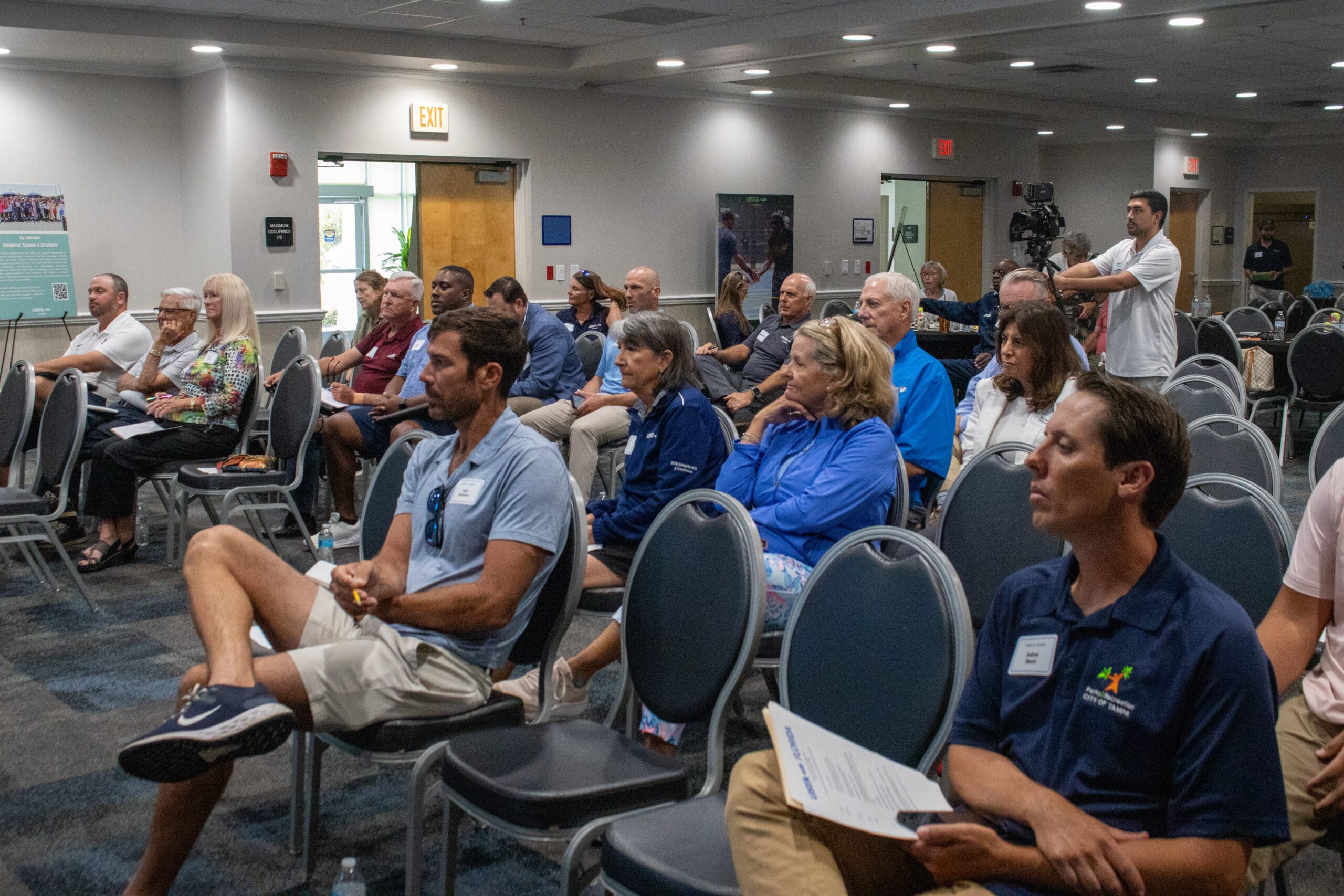
The day opened with a welcome from Dana Andrews, USTA Florida Board Past President and Advocacy Advisory & Public Parks Committee Chairperson as well as Christine Ducey, USTA Florida Director of Advocacy. The pair were able to share experiences advocating for the sport, what to expect from the workshop, and much more!
Following that was a presentation of Greater Tampa Tennis Data Insights led by Brad West, USTA Florida Business Intelligence Manger. The data painted a compelling picture of demand in the region: Hillsborough County alone has more than 129,000 adults who played tennis in the last year, an 8.5% adult participation rate that exceeds both the Florida and national averages, yet only 23% of the county’s 797 tennis courts are publicly accessible.
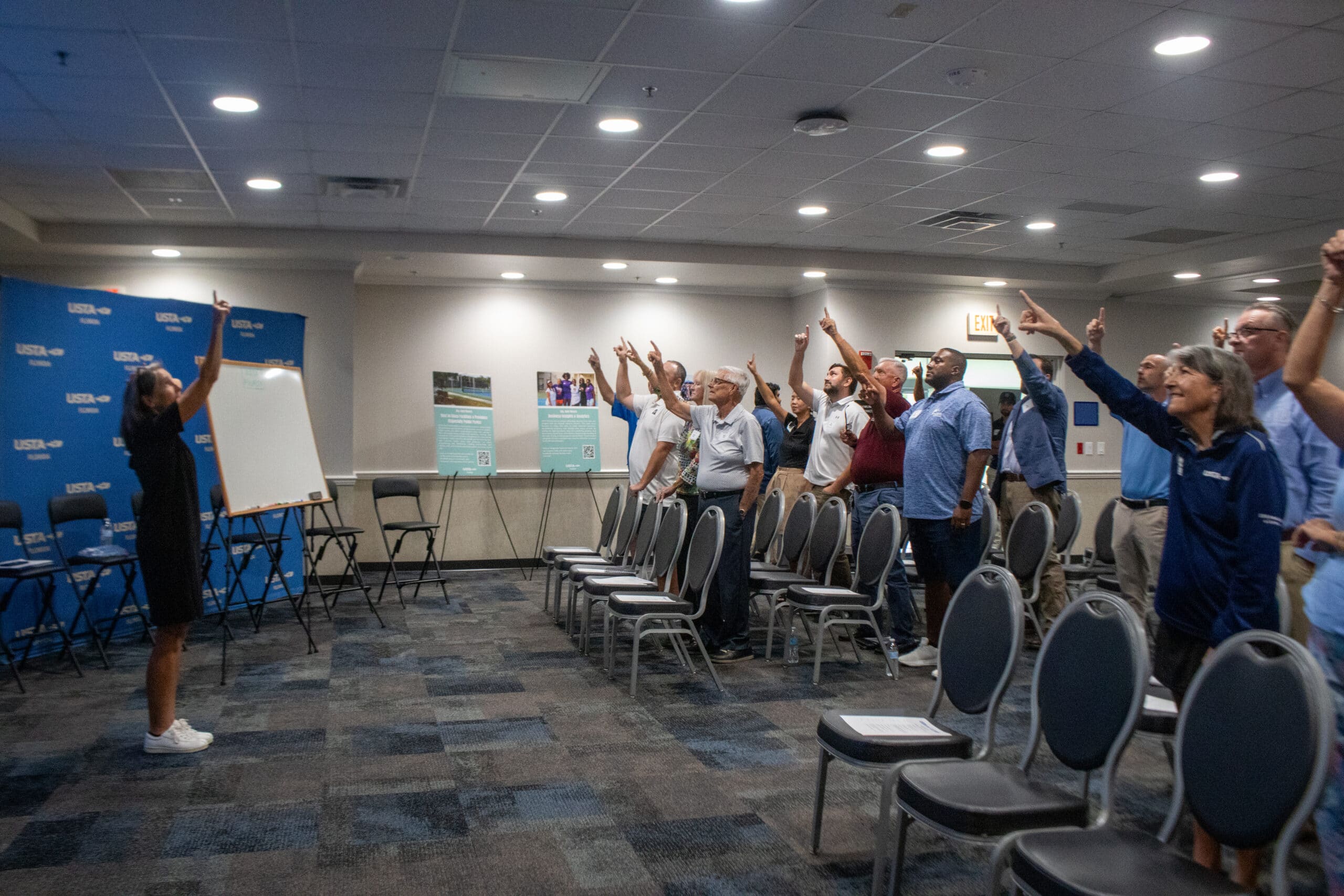
A synergy exercise led by Jane Wahl, USTA Florida Board Secretary, encouraged attendees to identify connections and opportunities across their local tennis communities before the day’s first panel discussion.
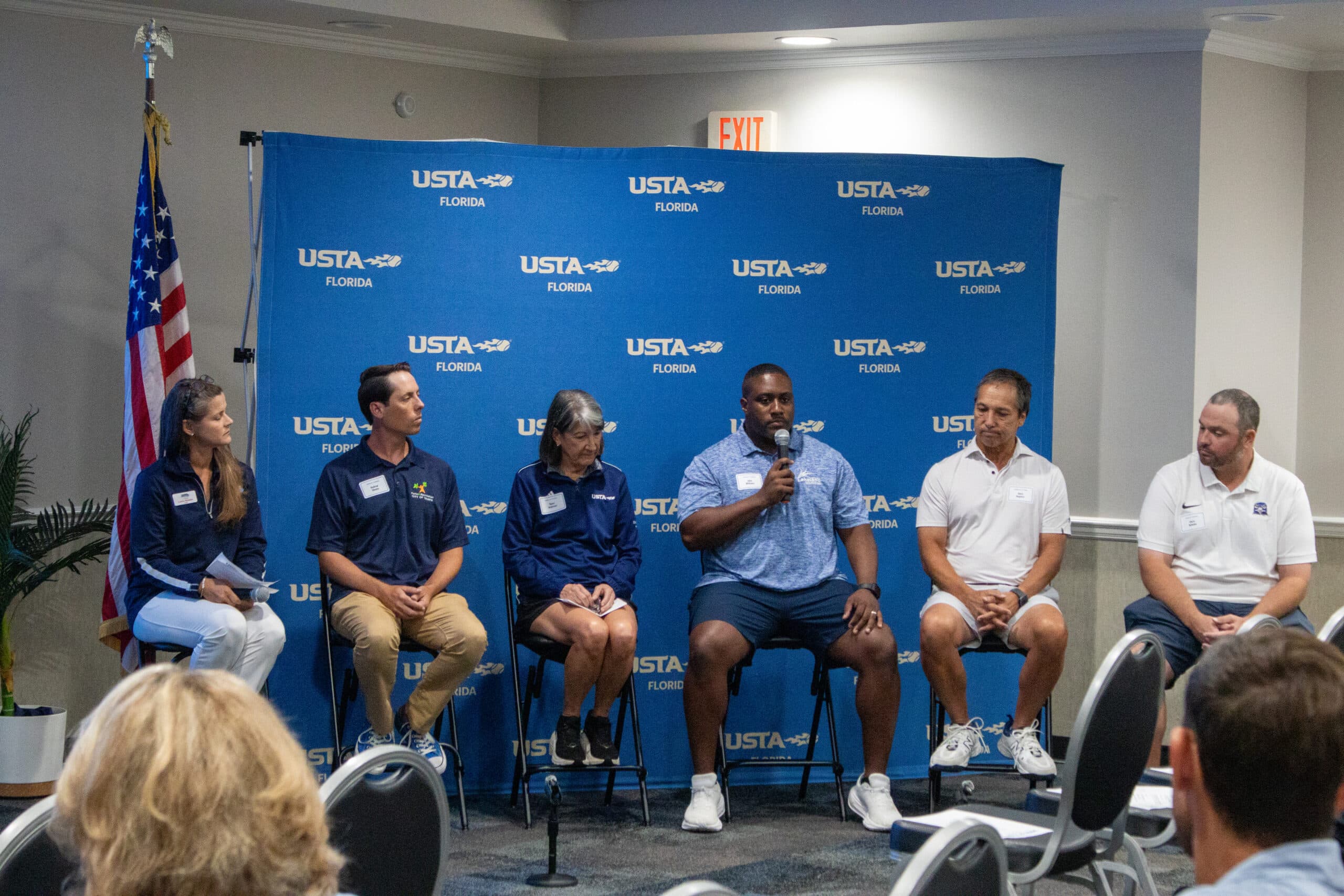
The panel showcased how to work effectively with Local Government & Key Stakeholders, moderated by USTA Florida Executive Director Laura Bowen. The panel featured a diverse group of voices from across the region, including Dana Andrews, USTA Florida Board Past President Advocacy Advisory & Public Parks Committee Chairperson; Chris Nyholm, Director of Tennis at Hillsborough College; Chris Hagman, President of Atlantic Recreation and RSPA Elite Professional; John Williams Jr., Recreation Supervisor for the City of Lakeland; and Andrew Sheets, Parks & Recreation Site Supervisor for the City of Tampa.
Panelists shared insights on the challenges facing public tennis facilities, the importance of strong facility operators, and how advocates can build productive relationships with local decision-makers.
Following a networking lunch, attendees participated in a group exercise, where table teams identified potential local advocacy projects and reported their findings to the room.
A session on local media outreach strategies, led by Nish Prathab, USTA Florida Director of Marketing & Communications, and Jaret Kappelman, Manager of Public Relations & Communications, gave attendees a practical framework for turning their tennis stories into local news coverage. From best practices to getting in touch and capturing the attention of reporters to revealing templates and resources for advocates to use, the session was very informative.
The afternoon concluded with a second panel discussion on Community Tennis Funding Opportunities, moderated by Kelly Scalise, USTA Florida Sponsor and Donor Development Manager. That panel featured Elizabeth DeConti, USTA Florida Foundation President; David Corredor, a City of Tampa engineer and adaptive sport athlete; and Todd Vande Berg and Nick Walton of The Sara Vande Berge Tennis Foundation. The discussion highlighted pathways for funding tennis programs and facilities, with a focus on grant opportunities and community partnerships.
The workshop underscored USTA Florida’s 3 Big Bold Moves, the organization’s strategic framework for driving tennis growth across the state: Best in Class Facilities and Providers, Business Insights and Analytics, and Volunteer System and Structure. Each element was present throughout the day, from the data presentation to the advocacy exercises to the panel discussions.

USTA Florida plans to continue expanding its Advocacy Workshop series, bringing the program to communities across the state as part of its mission to strengthen public tennis through education, collaboration and strategic advocacy.
To learn more about USTA Florida’s advocacy efforts or to get involved, visit ustaflorida.com/advocacy.


