Coaches, volunteers, park directors, providers and partners came to Orlando from every corner of the state this weekend for the 2026 Florida Tennis Summit, and they left with something more specific than inspiration. They left with a definition, a plan and an assignment. They also left with the numbers.
The State of Florida Tennis
The Summit marked the unveiling of the State of Florida Tennis report, USTA Florida’s clearest picture yet of where the sport stands across all 67 counties: how many Floridians are playing, where the game is growing, what the state’s courts and facilities actually look like, and where the biggest opportunities sit.
The report is the Business Insights and Analytics Big Bold Move made tangible. It gives every advocate, facility operator and local leader in Florida the same shared set of facts to work from, whether they are making a case to a city council, planning programming for next season, or deciding where to put the next court.
Friday: Advocacy on the Ground
The weekend opened ahead of the Summit itself with the USTA Florida Advocacy Workshop at Rosen Shingle Creek, where Central Florida tennis leaders spent the day learning to make the case for tennis in their own communities.
Brad West, USTA Florida business intelligence manager, laid out the numbers for Orange, Osceola and Seminole counties, including a region where roughly 472,000 residents play tennis or want to, where tennis generates about $75 million in annual spending, and where public courts make up as little as 21% of the total. Jennifer Gregg of USTA National walked attendees through approaching local government, Jaret Kappelman covered local media outreach, and Christine Ducey closed the day by having every attendee build and deliver a two-minute advocacy pitch.
Saturday: Bold Moves, Made Concrete
Saturday opened with “Florida as the Home for American Tennis: Turning Bold Moves into Action.” Executive Director Laura Bowen welcomed the room, USTA Florida President Chuck Gill connected the three Big Bold Moves to the growth of the game, and USTA Chief Executive Officer Craig Tiley delivered a State of Tennis in America keynote and laid out his vision for the organization. Gill then joined Tiley and World TeamTennis CEO Stephen Amritraj for a roundtable on professional tennis and how to tie major events more closely to the communities that host them.
Saturday’s program also included a panel on college tennis, hosted by Trishna Patel and featuring George Opelka and Adam Steinberg. The conversation covered where the college game stands today, from the pressures reshaping rosters and scholarships to the way recruiting has changed for Florida juniors and the families trying to navigate it. For a state that sends as many players into college programs as Florida does, the panel put real detail behind a pathway that many parents and coaches only see pieces of.
The larger point was about what college tennis does for the sport as a whole. It is the destination that keeps thousands of juniors training and competing through their teenage years, the proving ground where the next generation of American professionals develops, and the place a significant share of the country’s future coaches, directors and administrators come from. When the college game is healthy, the effects reach back down into every junior program and public court in the state. When it is under pressure, that pressure travels the same path in reverse, which is why the panelists argued the tennis community should pay attention to it well beyond the people whose own kids are being recruited.
From there attendees split into breakout tracks built directly on the Big Bold Moves: Empowering Volunteers, Best in Class Providers and Best in Class Facilities.
The facilities and providers tracks produced what may be the Summit’s most durable output. For the first time, USTA Florida put a working definition behind the phrase “best in class.” The standard is care, consistency and experience rather than size or budget. A neighborhood park with four courts can meet it. A single coach running Saturday morning clinics can meet it. That definition now exists in writing for every type of facility and every type of provider in Florida.
Together with the State of Florida Tennis report, it gives the state both halves of the picture: where tennis stands today, and what good looks like from here.
Saturday Night: The People Already Doing It
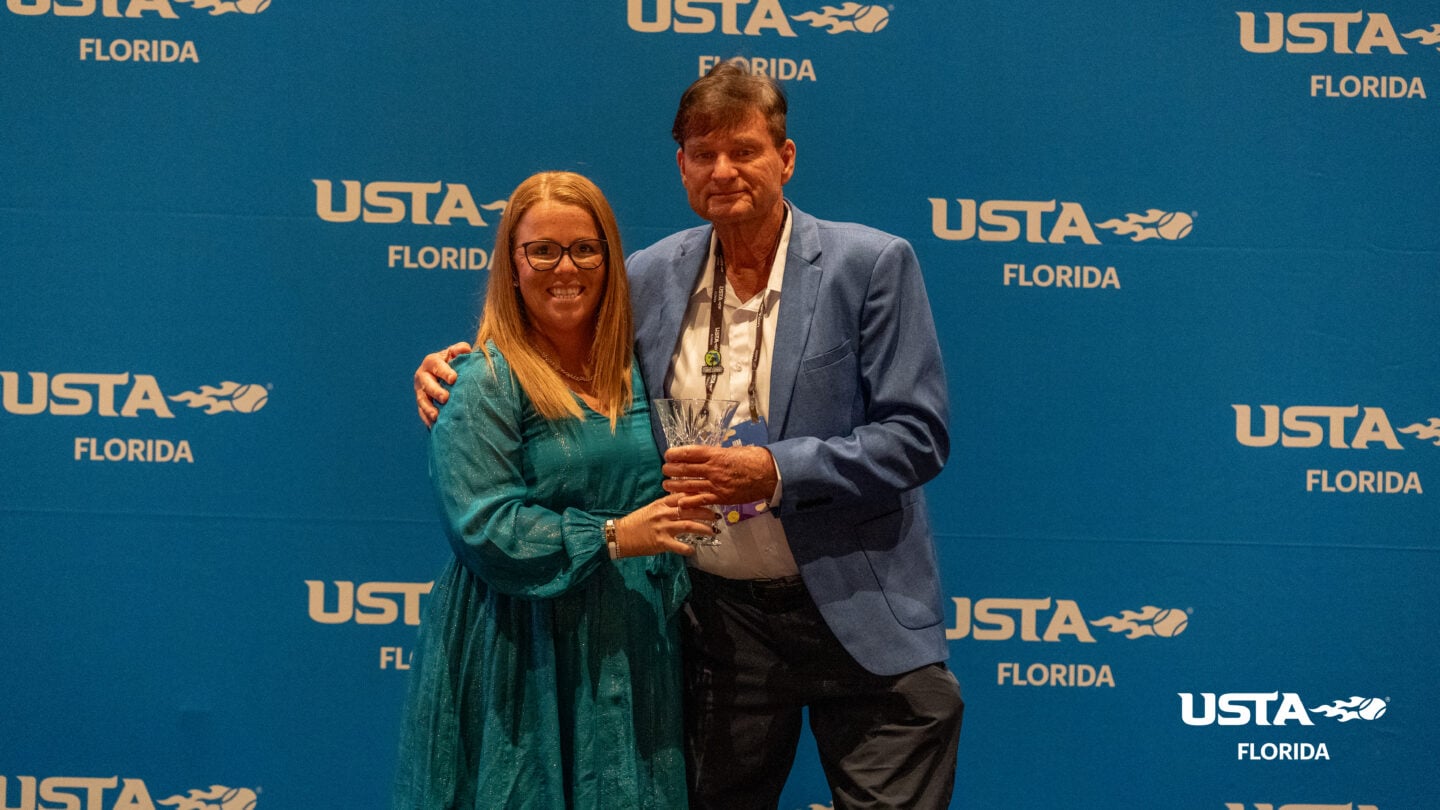
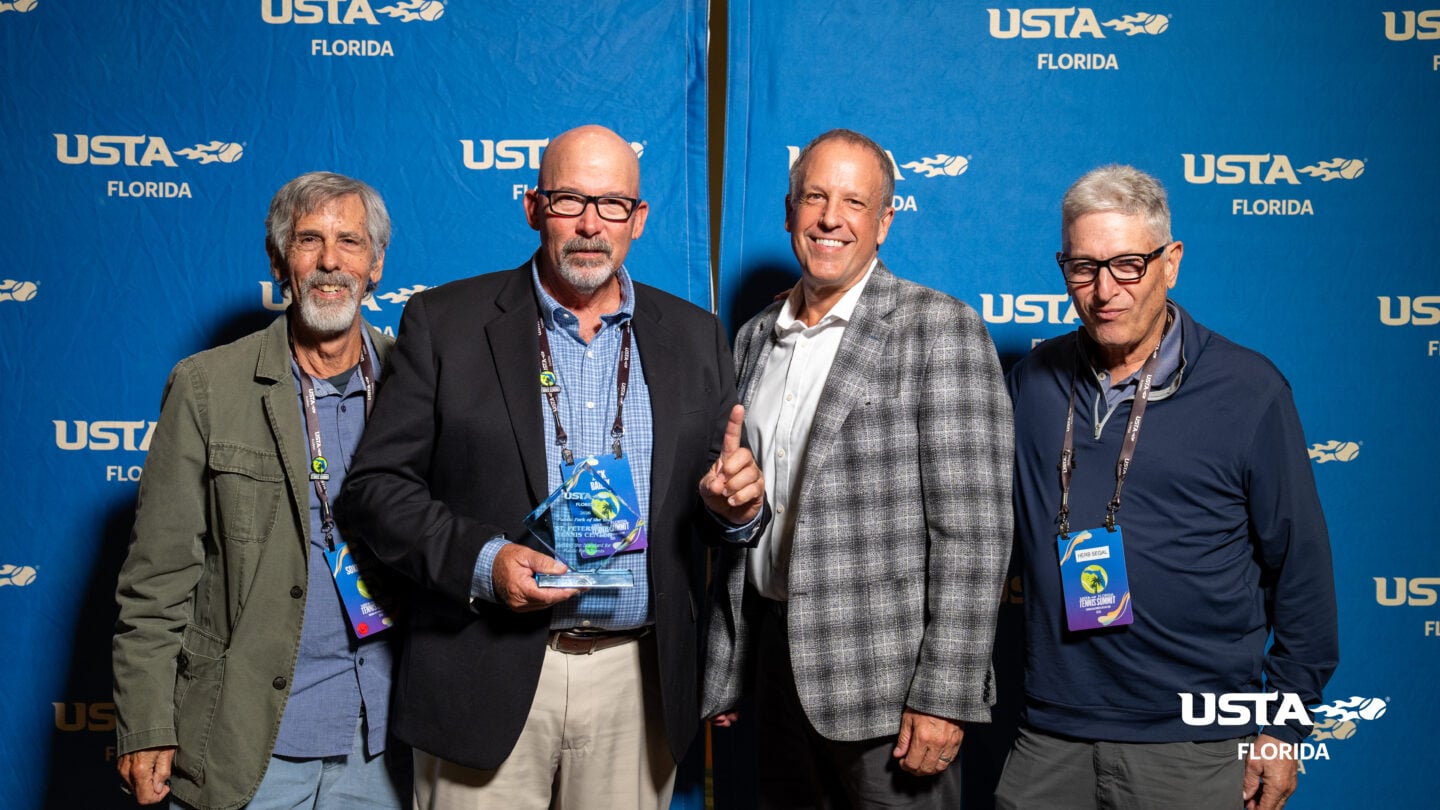
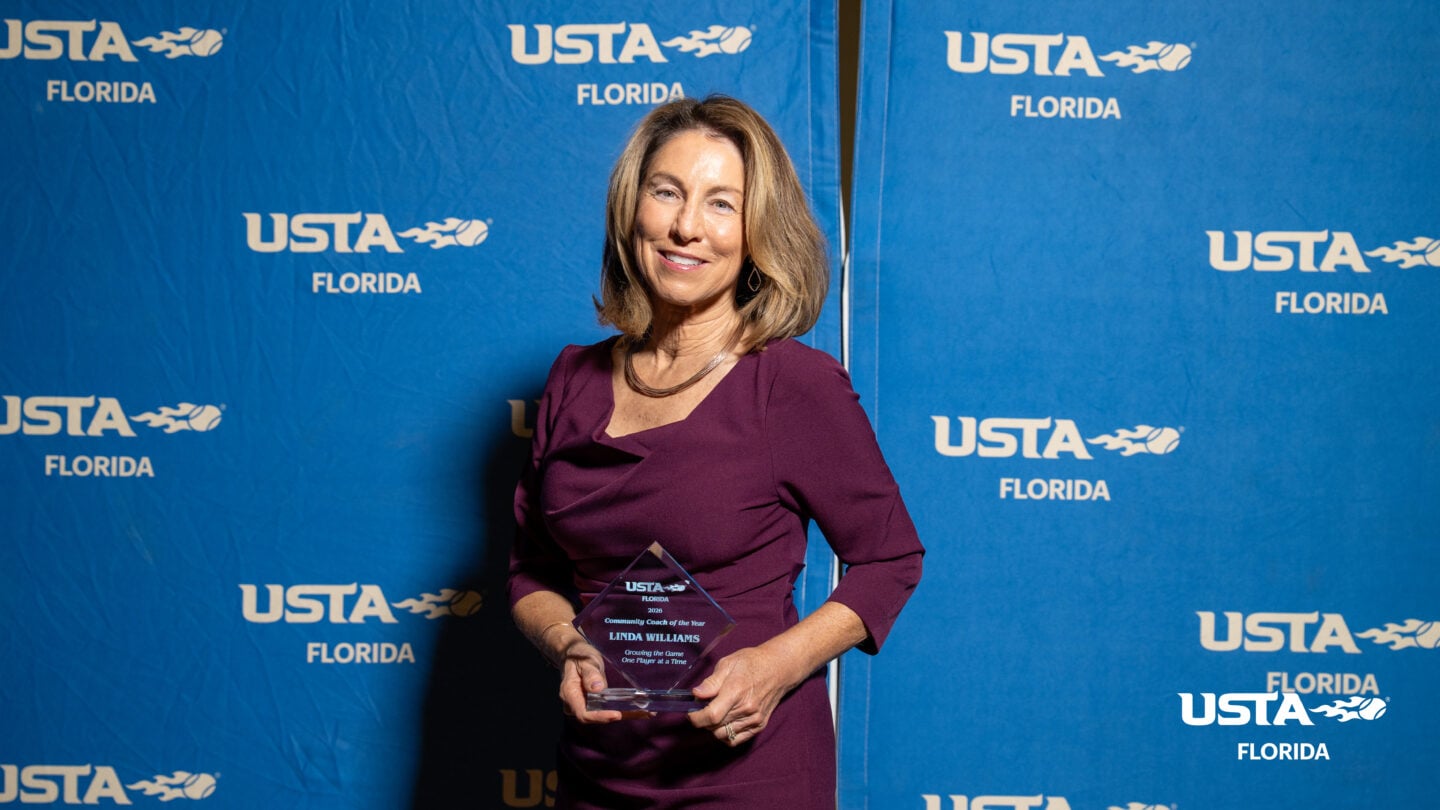
The awards dinner honored three winners who make the case better than any definition could.
Jim Thompson received the Excellence in Service Award. A USTA Florida tournament director, coach trainer and USTA Coaching mentor, Thompson is known for arriving at a site hours before the first ball is struck and for running events that feel, as his son put it, like family.
Linda Williams was named Community Coach of the Year. Williams learned tennis at 13 on the public courts in Lake City and now runs the youth camps on those same courts, having become a certified coach in 2024 after a decade of volunteer service with the Lake City Columbia Community Tennis Association.
The St. Petersburg Tennis Center was named Public Park of the Year. Florida’s oldest public clay court facility, open since 1919, has rebuilt from hurricane damage over the past year and operates on a simple promise: never say no to a player who wants to get on court.
The evening also featured a parent and player panel hosted by Ronny Gould, bringing two pairs on stage to talk candidly about their journeys through tennis. Ebony Evans-Molock joined her daughter Madison Molock, now a tennis player at Bethune-Cookman University, and Terri Florio, executive director of the MaliVai Washington Youth Foundation, joined Kameron Neal, a sophomore at Andrew Jackson High School and a USTA tournament-level player. Between them, the panel covered most of the pathway, from a player still in the middle of her junior years to one who has come out the other side and into the college game.
The parents spoke about what support actually looks like over the long run, the travel and the expense, the hard conversations after tough losses, and knowing when to push and when to step back. The players talked about what it is like to compete in Florida, where the depth of the junior field means every tournament is a test and where the standard is high enough that progress is measured in small increments. Taken together, the panel gave the room something the data cannot provide: the experience of the pathway from the inside, told by the families living it.
Sunday: Take It Home
The Summit closed with “Public Tennis Courts Build Communities and Champions,” hosted by Marcelo Gouts, 2025-2026 USTA Florida Board President-Elect, who opened with the case for public court investment before moderating a USTA Florida Hall of Fame advocacy panel featuring MaliVai Washington, Dana Andrews and Jim Barnes.
Gouts closed with the ask the entire weekend had been building toward. Go home and do three things: restore the courts your community already has, push for new ones where demand exists, and get programming onto the courts sitting empty.
What Happens Next
The Summit was built on the premise that Florida tennis grows faster when it moves together than when each facility, coach and volunteer works alone. Three days in Orlando produced the data, the standard and the proof that both are achievable. The rest happens in 67 counties starting Monday.
Read the State of Florida Tennis report here. To get involved in USTA Florida’s advocacy work, access the toolkit, or request support for a local project, visit ustaflorida.com/tennis-advocacy o correo electrónico advocacy@ustaflorida.com.
Publicado por: