

Wheelchair tennis
USTA Florida is dedicated to providing top-flight programming and developmental opportunities to wheelchair athletes of all ages and backgrounds. The goal, above all else, is to learn the sport and have fun.
About the sport
What is wheelchair tennis?
Wheelchair tennis is tennis – played from a wheelchair. The rules are almost identical to the standing game, with one key difference: players are allowed two bounces instead of one. That single rule change opens the game to anyone with a permanent mobility-related physical disability, no prior tennis background required.
From recreational rallies to professional Grand Slam events, wheelchair tennis has one of the widest competitive ladders in adaptive sport. Florida, with its year-round sunshine and deep tennis infrastructure, is one of the best places in the country to play.
One rule change, world of difference
Wheelchair players may receive the ball in two bounces. The second bounce can land outside the court. Everything else – scoring, court size, net height – is identical to the standing game.
Open to a wide range of disabilities
Spinal cord injury, amputation, multiple sclerosis, spina bifida, stroke, and more – any permanent mobility-related disability that substantially limits lower extremity function may qualify.
You only need one wheelchair player to start
Any existing tennis program can integrate wheelchair play. Wheelchair athletes can take part in the same sessions as standing players – they just need access to a sport chair and a willing coach.
Rules and play
How the game works
If you know tennis, you already know most of wheelchair tennis. Here are the key things to understand before you get on court.
The only rule difference from the standing game. A wheelchair player may let the ball bounce twice before returning it. The second bounce may land outside the court boundaries. Able-bodied players hitting with a wheelchair athlete use the standard one-bounce rule.
All court dimensions, net heights, and scoring formats are identical to the open game. Singles and doubles are both played. Mixed doubles – pairing a wheelchair athlete with a standing player – is also a recognized format at many events.
Athletes with significant impairment in both their lower and upper extremities compete in the quad division. Players may use a power wheelchair, and they are permitted to tape the racket to their hand. The two-bounce rule applies in quad play as well.
To compete in sanctioned wheelchair tennis events, a player must have a medically diagnosed permanent mobility-related physical disability that results in a substantial loss of function in one or both lower extremities. Some players may be able to walk but choose to use a sport chair for improved mobility and safety on court.
A sport-specific wheelchair is highly recommended – your everyday mobility chair is not designed for the lateral movement and quick pivots the sport demands. Most programs have loaner chairs for beginners. Once you fall for the game, there are grant programs, manufacturers, and local resources to help you get your own.

Common questions
What people ask us most
New to wheelchair tennis, or thinking about starting a program? Here are the questions we hear most often.
To be eligible for competitive wheelchair tennis, a player must have a medically diagnosed permanent mobility-related physical disability that results in a substantial loss of function in one or both lower extremities. Athletes with spinal cord injury, stroke, amputation, multiple sclerosis, neuromuscular disease, and spina bifida all participate. Some players may be able to stand and walk but use a sport chair for improved safety and mobility on court.
Absolutely. Whether you have a tennis background or not, we can find a program and format that fits your current level and helps you develop. There are beginner clinics, open play sessions, and one-on-one instruction available across Florida.
Yes. Your everyday wheelchair is not designed for the lateral movement and quick pivots that tennis demands. A sport-specific chair is strongly recommended. Most programs have loaners for newcomers, so you can try the game before committing to equipment.
Ask your local program – most keep loaner chairs for people just getting started.
Once you are ready to own one, your chair will be fitted to your specific disability and function. Everyone’s body and needs are different.
Grant organizations can help fund the purchase – see the equipment resources section below.
Manufacturers also sell direct, and several are sponsors of USTA Florida programs.
Contact USTA Florida – we often know of nearby programs that are not yet fully listed online, or past programs that could be restarted.
Many players drive to the next closest program. Once you try the game, the drive tends to feel short.
If you want to start something in your area, we have resources to help you do that too.
Questions? We’re here.
Not sure where to start or whether there is a program near you? Reach out and we’ll help find the right next step.
Compete and grow
Ready to take it to the next level?
Wheelchair tennis has a full competitive ladder in Florida and nationally – from local USTA tournaments all the way up to ITF professional events. Here is everything you need to find your place in the game.
Ways to play
There are courts and competitions all over Florida. Here are the best places to find your next match.
USTA tournaments
Browse sanctioned wheelchair tennis tournaments happening across Florida and beyond.
Collegiate programs
College students with disabilities can compete through USTA Florida’s collegiate wheelchair programs.
Start a program
Bring wheelchair tennis to your facility
It is easier than you think to add wheelchair tennis to an existing program lineup. Whether you want to run a beginner clinic, host a tournament, or weave adaptive play into your regular schedule, USTA Florida can help you get there.
Start with something you and your organization can genuinely get excited about. A Saturday beginner clinic, a monthly open play session, or a first local tournament – any of these is a great starting point.
If you are new to the wheelchair tennis community, team up with someone who knows it. Reach out to USTA Florida, other programs around the state, or disability-focused community organizations. A local partner makes outreach faster and more genuine.
Formalize things before you launch:
-
Set a budget
-
Define your milestones and timeline
-
Decide how you will measure success
The most important thing is to make it happen. There will be trial and error. As long as people are on court and enjoying themselves, you are doing it right.
Keep track of what works and what does not, and share it with other programs across Florida. The more we learn from each other, the better our whole community gets at growing the sport.

Get involved
Become a wheelchair tennis coach
Coaching wheelchair tennis is one of the most rewarding things you can do in this sport. It does not require a completely separate skill set – most of what makes a great tennis coach carries over directly. What helps most is curiosity, patience, and a willingness to learn alongside your athletes.
USTA Florida has education and certification pathways to help you get started and keep growing.
USTA Florida has partnered with select public parks across the state to train and employ new and diverse tennis coaches to deliver a broad range of community tennis programs. From Cardio Tennis to adaptive and adult beginner programs, each experience is built to fit community needs and prepare you to deliver the sport of a lifetime.
Equipment grants
- Fundación USTA de Florida
- USTA Florida Foundation Wheelchair Grant FAQs
- Challenged Athlete’s Foundation
- Kelly Brush Foundation
- Disabled Sports USA
- Getting Back Up
- High Fives Non-Profit Foundation
- IM Able Foundation
- The Semper Fi Fund
- US Dept of Veteran Affairs
- Be Perfect SCI Foundation
- Byron Riesch Paralysis Foundation
Equipment manufacturers
El último Tenis en silla de ruedas Noticias
Ver todas las noticias de Wheelchair Tennis
Celebrando 50 años de tenis en silla de ruedas.

Celebrating Disability Pride Month: Eddie Nieves-Tañon
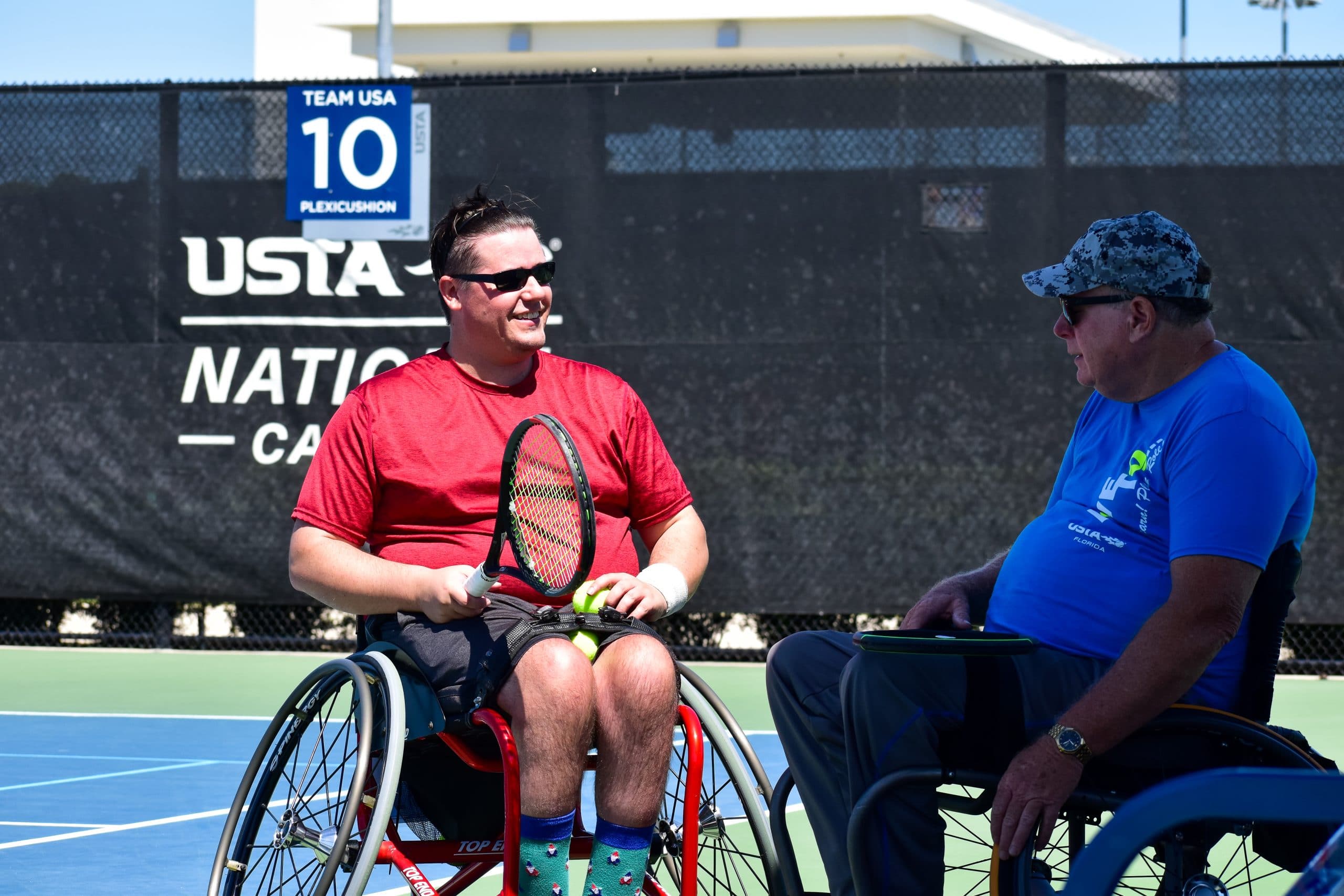
Wheelchair Tennis Action Returns at 2022 Team Roller Classic
Mark Your Calendar for the USTA Florida Team Roller Classic
Conéctate con nosotros
¿Tienes alguna pregunta, necesitas orientación o quieres aprender más?
No dudes en contactarnos cuando quieras; nuestro equipo estará encantado de orientarte.